
Quasi-real-time analysis system

AMATERASS

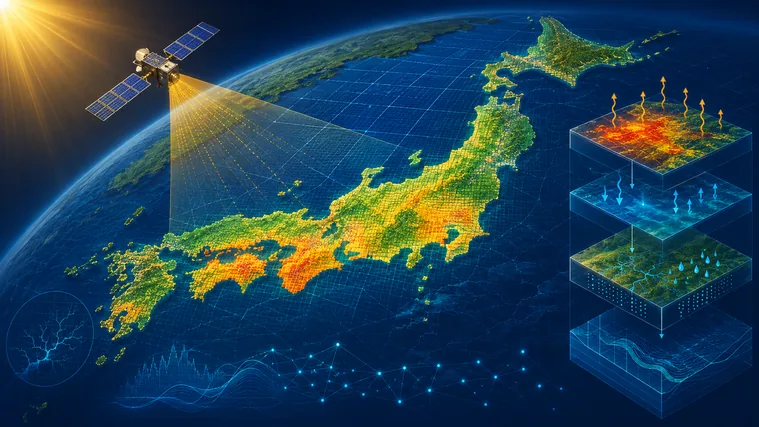
Geostationary satellite-based solar radiation analysis for meteorology & climate, renewable energy, agriculture, social science, and disaster resilience.

AMATERASS transforms geostationary meteorological satellite observations into spatially continuous solar radiation information. Developed, implemented, and long-term operated by since 2007.

Start
2007-07-07
Quasi-real-time solar radiation analysis started on July 7, 2007, continuing through Himawari 7, 8, and 9.
Downloads
200M+
205,031,268 AMATERASS downloads by March 2026. Over 400M total including gridded-format products.
Status
Quasi-real-time
Continuous analysis every 10 min and every 2.5 min for selected domains.
Products
Solar Flux
Global, direct & diffuse radiation at surface and TOA, with PV output estimation.
Method
Physics-based
Neural-network solver retains radiative transfer physics at speed — unlike regression or energy-flow models.
Overview

Long-term quasi-real-time
Earth observation in operation.

AMATERASS is a physical analysis system for geostationary meteorological satellite observations, rather than an ordinary image-processing or empirical-model approach. Solar radiation reaches the Earth's surface through absorption by gases such as water vapor and ozone, scattering by aerosols and cloud particles, and Rayleigh scattering by molecules. AMATERASS analyzes satellite observations by accounting for these effects, including multiple reflection between the surface and atmosphere.

The system grew from radiative-transfer calculations and neural-network acceleration, then expanded into sensor calibration for stable physical use of geostationary satellite data, geolocation correction algorithms enabling latitude-longitude gridded format conversion, and applications spanning photovoltaics, solar thermal, land-surface and hydrology, agriculture and vegetation, social systems, and disaster resilience — forming a foundation for cross-disciplinary use of solar radiation data.

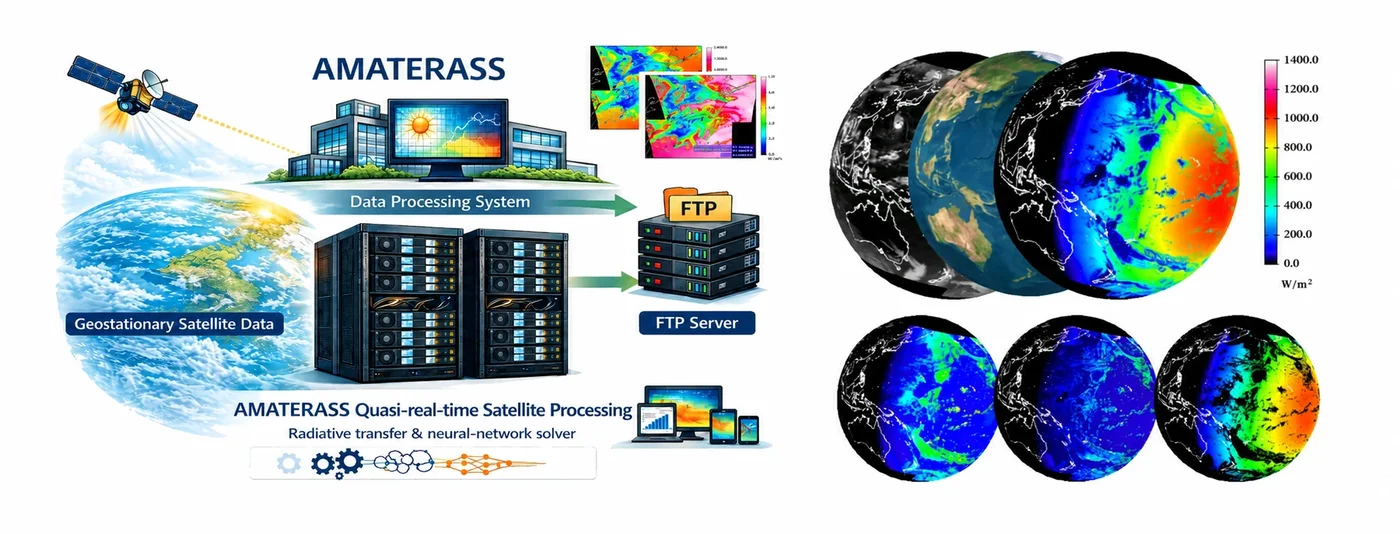
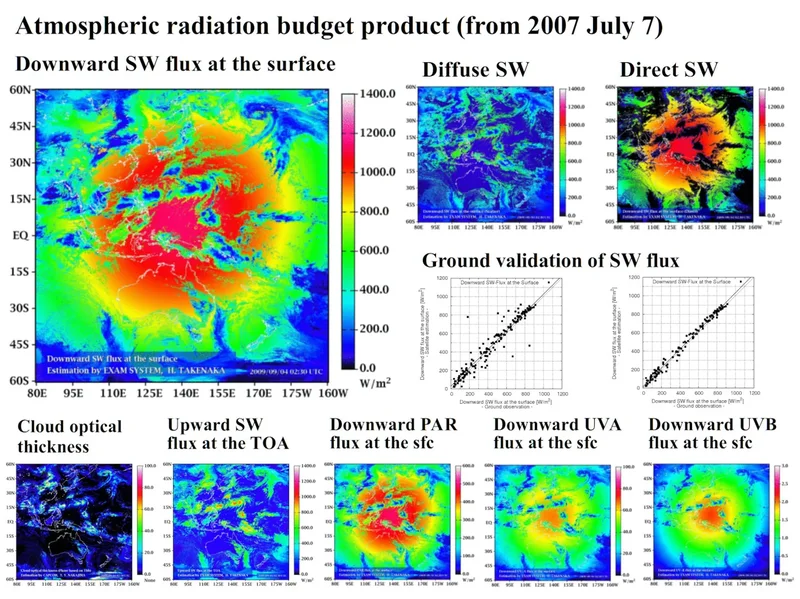
AMATERASS system overview and radiation product suite

AMATERASS system overview and radiation product suite

Quasi-real-time processing of geostationary meteorological satellite observations into spatially continuous surface and top-of-atmosphere radiation products. Data is available approximately 10 minutes after satellite observation.

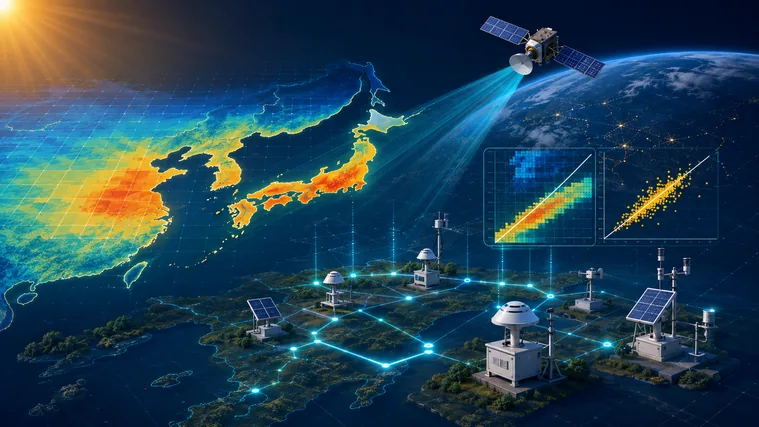
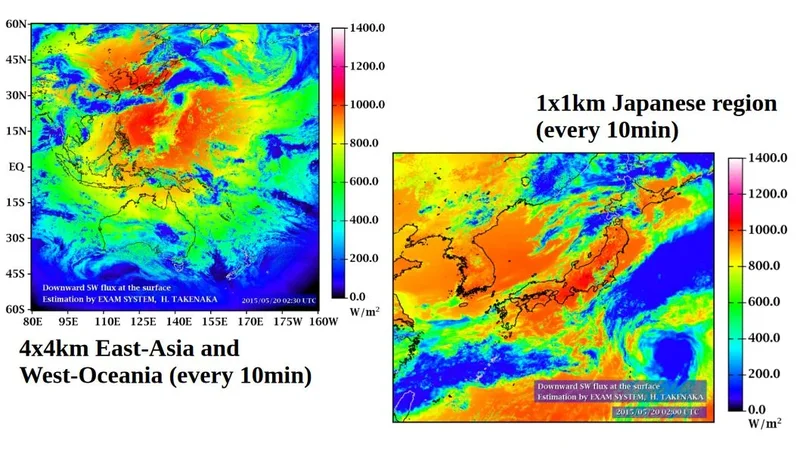
AMATERASS East Asia and West Oceania solar radiation map

Solar radiation maps

Wide-area solar radiation products from geostationary satellite observations, updated every 10 min. These maps provide spatial context for cloud fields, terrain effects, and regional radiation variability, forming a basic input layer for renewable-energy, climate, and environmental applications.

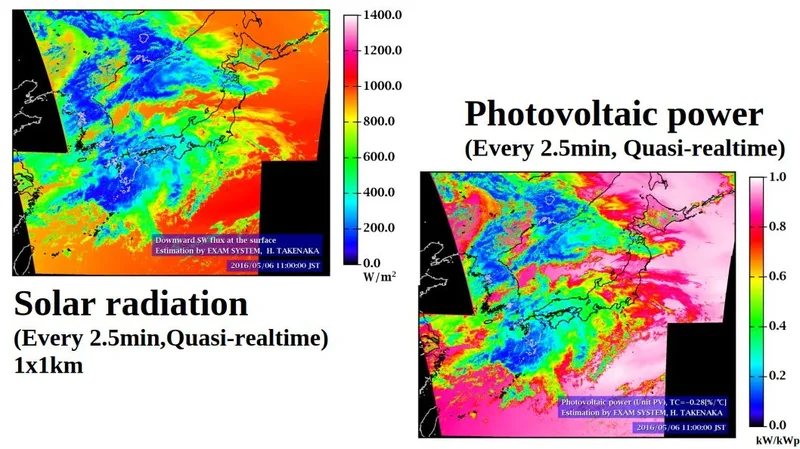
Solar radiation and photovoltaic power quasi-real-time maps

Quasi-real-time PV applications

Solar radiation and photovoltaic power estimates at high spatial and temporal resolution, including every 2.5 min analysis.

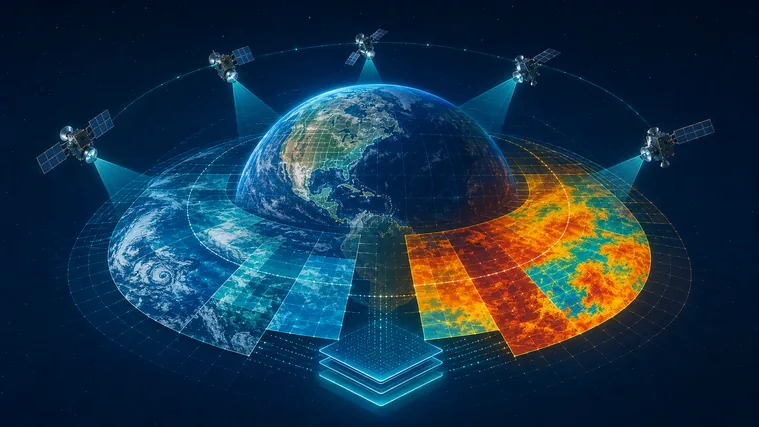
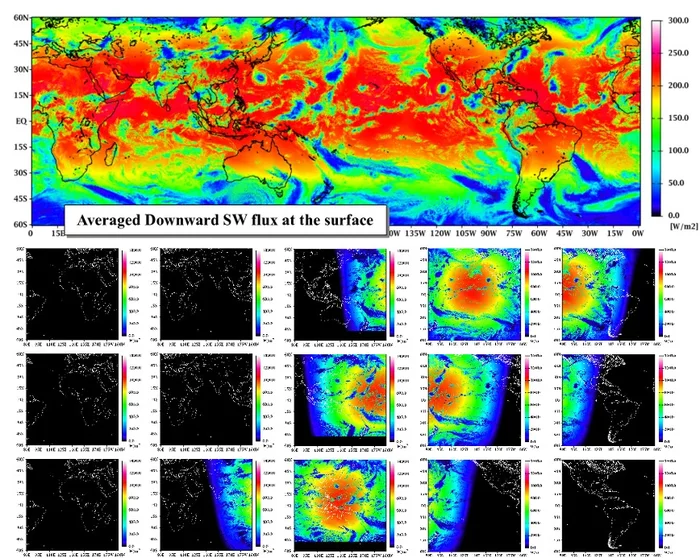
Global and multi-geostationary satellite solar radiation coverage

Toward global coverage

Challenge toward multi-geostationary satellite analysis and global solar-radiation products. Extending the analysis from Himawari to multiple geostationary satellite domains supports wide-area, high-frequency monitoring across the tropics and mid-latitudes.

Physical analysis

Physical analysis of satellite observations.

AMATERASS is a physical analysis system for geostationary meteorological satellite observations, rather than an ordinary image-processing or empirical-model approach. It interprets observations through absorption, scattering, cloud effects, and surface–atmosphere radiative exchange.

The goal is to convert observed radiances into physically meaningful solar-radiation quantities—such as global, direct, and diffuse components—by combining radiative-transfer knowledge, in-situ observations, site-scale validation, and high-frequency satellite data.

Physical analysis of satellite observations

From satellite radiances to physically meaningful solar-radiation quantities

Radiative-transfer knowledge, in-situ observations, site-scale validation, and high-frequency satellite data are combined to estimate global, direct, and diffuse solar-radiation components.

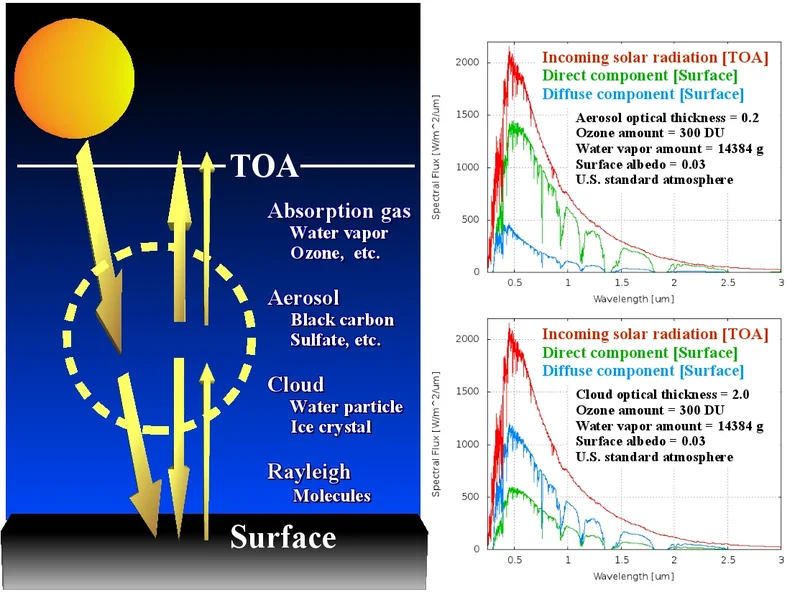
Radiative transfer and spectral decomposition

Radiative transfer and spectral interpretation

Satellite radiances are interpreted through atmospheric absorption and scattering by gases, aerosols, clouds, and molecules.

Ground-based sky radiometry — SKYNET

In-situ observation heritage

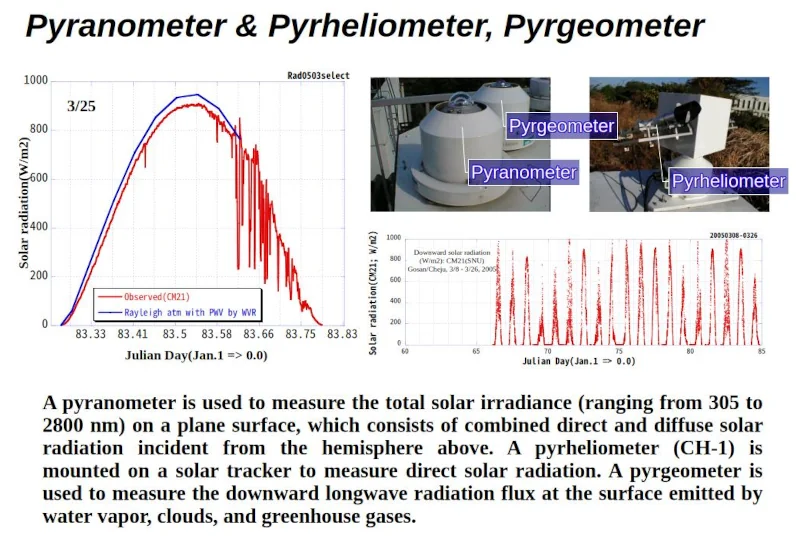
The research was built step by step from ground radiation measurements and site-scale estimation above observation points toward wide-area satellite analysis.

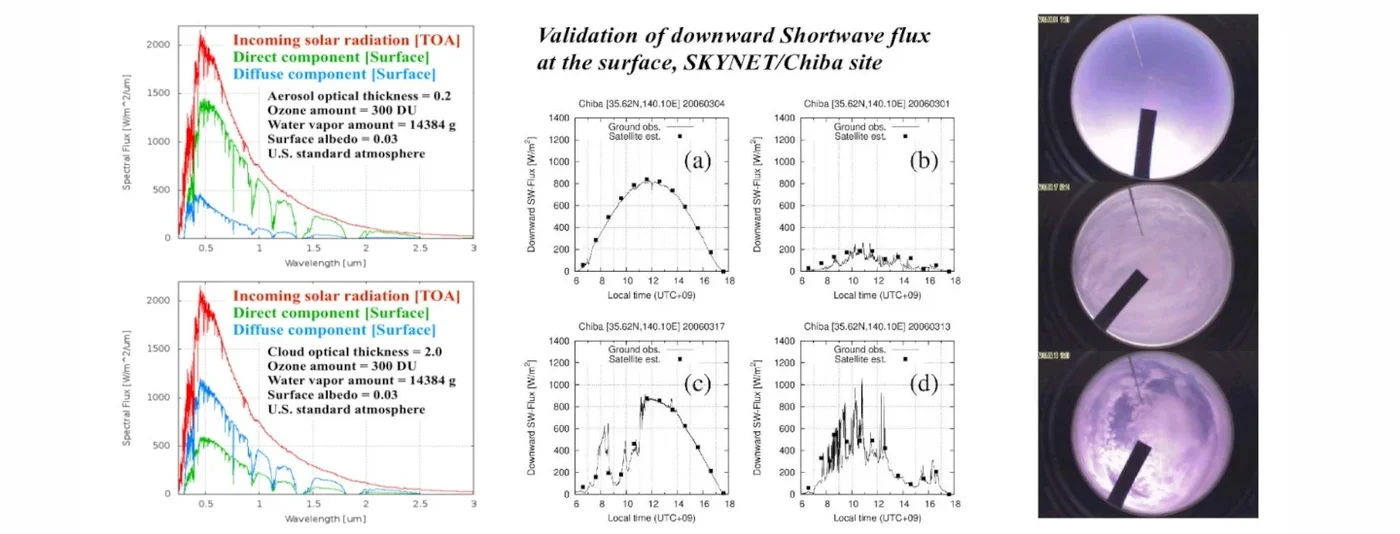
Validation of surface solar radiation

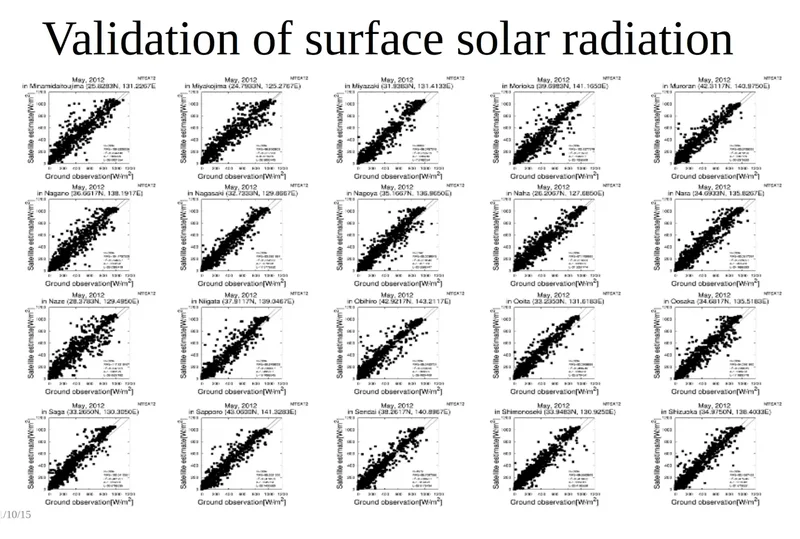
Validation of surface solar radiation

Satellite-based surface solar radiation estimates are evaluated against ground observations across multiple sites to verify quantitative reliability.

Physical processesThe analysis targets radiation physics rather than visual texture or object recognition in the image.
Quantitative productsThe outputs are physically interpretable radiation quantities, not merely processed satellite pictures.
Observation chainSatellite data, atmospheric theory, and ground measurements are connected in a single operational framework.
Learning algorithm

Development of the learning algorithm
for radiative-transfer analysis.

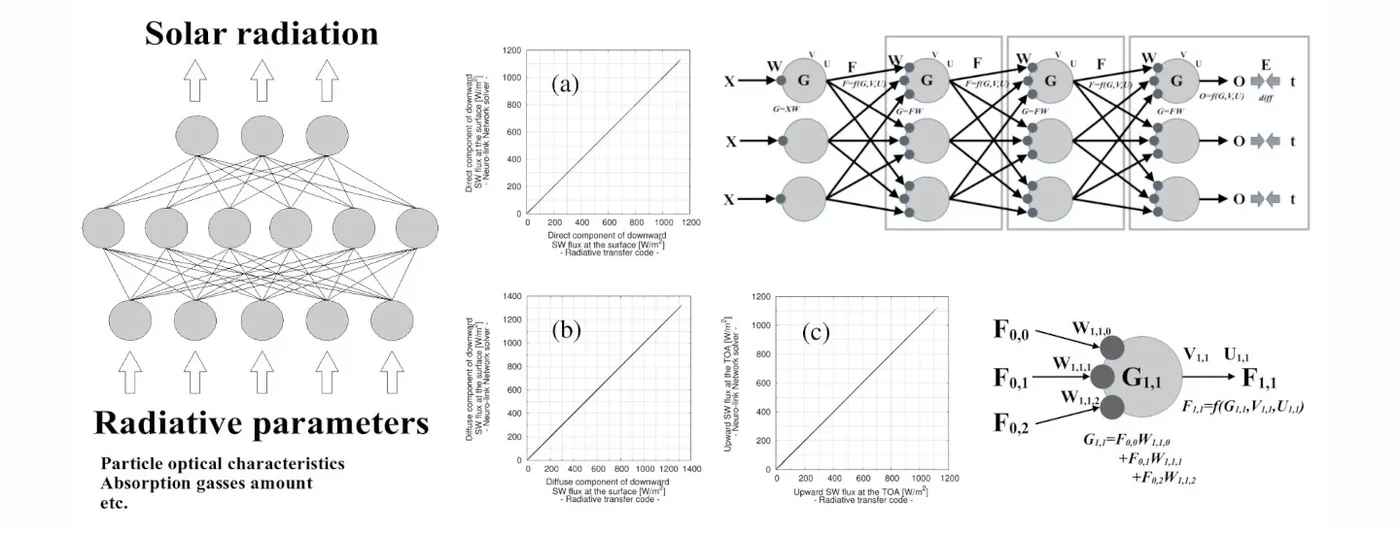
AMATERASS originates from the idea of learning radiative-transfer calculations with neural networks, rather than relying only on large lookup tables. The learning algorithm was developed to estimate solar radiation from radiative parameters while retaining a physics-based interpretation.

This foundation connects radiation physics, neural-network acceleration, and quasi-real-time satellite analysis.

Neural-network learning algorithm for radiative-transfer analysis

Development of the learning algorithm for radiative-transfer analysis

Neural networks were developed to learn radiative-transfer calculations from radiative parameters and accelerate physically grounded solar-radiation estimation. This learning approach became the computational bridge between detailed atmospheric radiation physics and operational processing of high-frequency satellite observations.

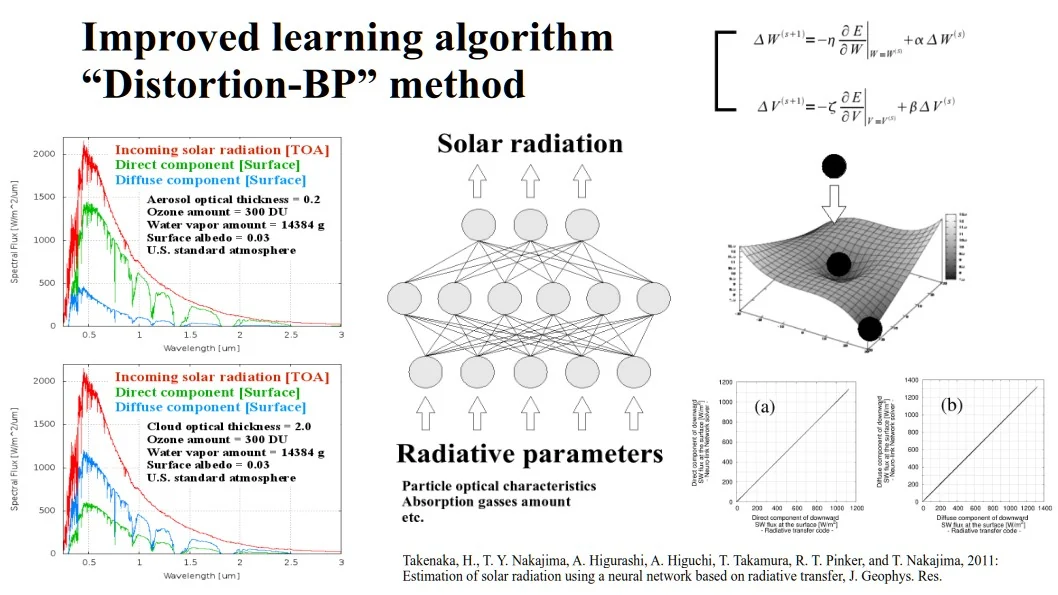
Distortion-BP learning algorithm

Development of the learning algorithm

The Distortion-BP method was developed to learn radiative-transfer calculations and estimate solar radiation from radiative parameters. This algorithmic foundation reduced dependence on large lookup tables and connected physical radiation theory to fast quasi-real-time satellite analysis.

Atmospheric radiation budget products and first AMATERASS results

Radiation-budget foundation

A neural-network solver trained on radiative-transfer calculations accelerated physically based radiation estimation by about a factor of 1,000. This speed-up made it practical to analyze wide-area, high-temporal-resolution geostationary satellite observations and produce operational atmospheric radiation-budget products.

Development history

How AMATERASS Evolved.

The AMATERASS story is not a single dataset story. Starting from atmospheric physics research aimed at understanding the radiation budget, it progressed through fast radiation calculation, satellite sensor calibration, quasi-real-time operation, and geolocation correction for high-accuracy gridded satellite products. The 2011 Great East Japan Earthquake triggered a decisive turn toward photovoltaic applications and cross-disciplinary collaboration — and the story continues with international research with NASA.

01

Learning radiative-transfer calculation

Neural-network acceleration of radiative-transfer calculations enabled fast, physically grounded solar radiation estimation.

02

Vicarious calibration for geostationary satellite observations

Calibration research with the Japan Meteorological Agency contributed to stable physical use of geostationary satellite data and WMO/GSICS-related activities (JMA/MSC calibration guide).

03

AMATERASS begins in 2007

Quasi-real-time solar radiation analysis using Himawari observations started on July 7, 2007, and continued through successive satellite generations.

04

High-accuracy gridded satellite products enabled by the Geo-information Correction method

The Geo-information Correction method enabled high-accuracy gridded geostationary satellite products for quantitative analysis.

05

Response to energy and power-system needs

After the 2011 Great East Japan Earthquake, AMATERASS expanded toward satellite-based photovoltaic estimation, actively sharing data across disciplinary boundaries with energy, power-system, climate, and social-system researchers.

06

Applications and collaborations

The system supports research and applications across meteorology & climate, renewable energy, agriculture, social science, and disaster resilience.

Geo-information Correction method / Satellite gridded format

From corrected geolocation to
latitude–longitude gridded satellite products.

Geostationary satellites appear nearly stationary from Earth, enabling high-frequency observation of the same region — a major advantage for analyzing rapidly evolving atmospheric phenomena such as clouds. However, scanning mirror motion, satellite attitude variations, and navigation errors cause frame-by-frame positional shifts. Geo-information Correction method addresses this problem by correcting geolocation and enabling gridded-format data suitable for downstream analysis.

The geolocation-correction and disk-to-grid conversion capabilities developed through AMATERASS-related work formed part of the technical lineage leading to subsequent gridded geostationary satellite products, including the NASA GeoNEX L1G product workflow. The requirement for physically comparable, stable satellite data that drove AMATERASS development connects directly to the broader need for wide-area gridded products.

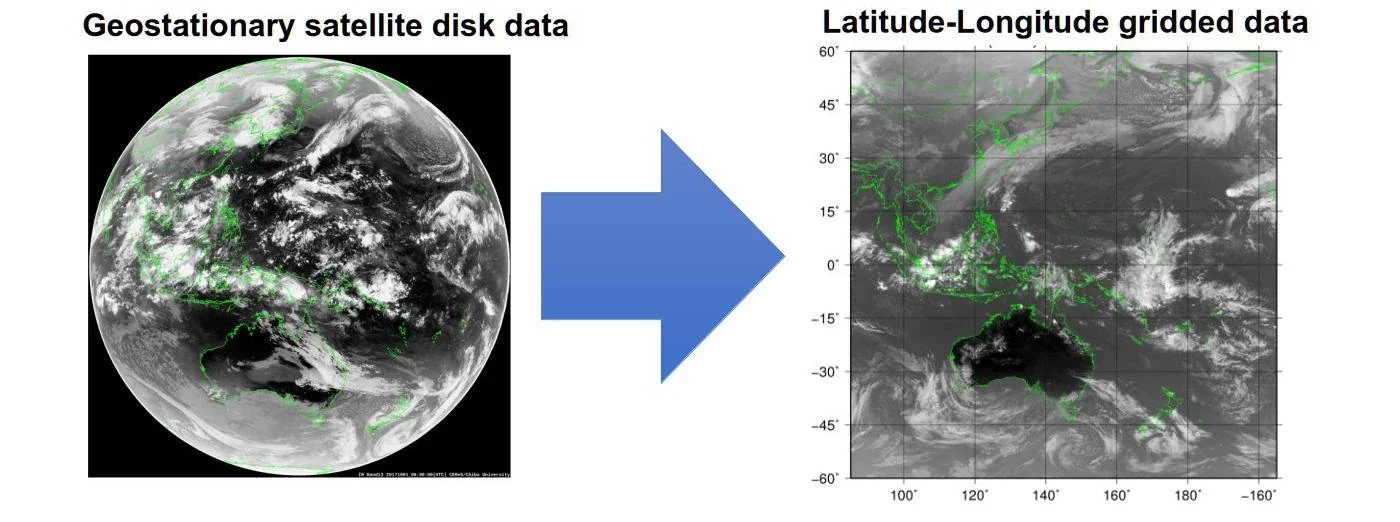
Conversion from geostationary satellite disk data to gridded data

From geostationary disk observations to latitude–longitude gridded data

Geostationary satellites observe the Earth as disk-shaped data in satellite projection. AMATERASS-related programs convert these observations into latitude–longitude gridded data, conceptually transforming Level-1A-equivalent disk data into Level-1B-equivalent gridded products.

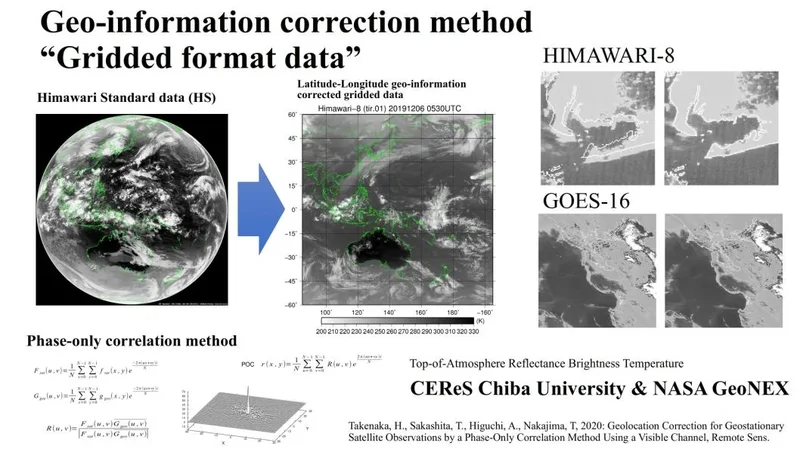
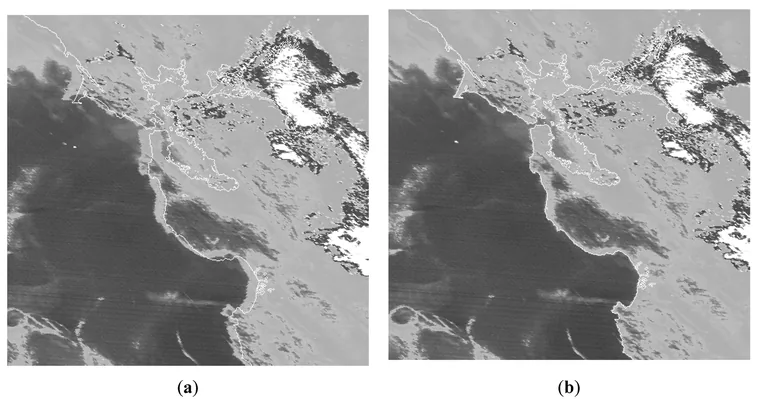
Geo-information correction method

Geo-information correction method

Phase-only correlation and gridded-format processing correct positional shifts in Himawari and GOES-class geostationary observations. The correction stabilizes the satellite image sequence and supports quantitative mapping, compositing, and time-series analysis on latitude–longitude grids.

GeoNEX product example

AMATERASS-origin algorithms in NASA GeoNEX L1G products

AMATERASS-origin geolocation correction and gridded satellite product generation programs provided to NASA NEX were used in the NASA GeoNEX L1G product workflow, together with further development, integration, and execution by the GeoNEX team.

Applications

Solar radiation information for science, energy, society, and resilience.

Meteorology & Climate

Radiation budget, clouds, aerosols, satellite calibration, and climate-model evaluation.

Renewable Energy

Photovoltaic output estimation, solar resource assessment, and distributed power systems.

Agriculture & Vegetation

Crop and fruit environments, radiation-driven productivity, and climate impact analysis.

Social Science

Regional energy planning, demand-side analysis, urban systems, and data-driven decision support.

Disaster Resilience

Distributed generation, blackout resilience, water resources, and emergency energy planning.

Selected studies

Selected studies using AMATERASS, gridded geostationary satellite data, and related algorithms.

These examples are arranged broadly in chronological order.

2013Renewable energy / Microgrids

Game Theoretic Receding Horizon Cooperative Network Formation for Distributed Microgrids: Variability Reduction of Photovoltaics

Distributed microgrids and photovoltaic variability reduction supported by AMATERASS/EXAM-related solar-radiation information.

doi:10.9746/jcmsi.6.281 →

2015Land surface / hydrology

1-km-resolution land surface analysis over Japan: Impact of satellite-derived solar radiation

Satellite-derived solar radiation improves radiation, heat, and water-budget components in Japanese land-surface analysis.

doi:10.3178/hrl.9.14 →
2016Renewable energy / grid control

Voltage Control Method Utilizing Solar Radiation Data in High Spatial Resolution for Service Restoration in Distribution Networks with PV

High-spatial-resolution solar radiation data support voltage control and service restoration in distribution networks with photovoltaic systems.

doi:10.1061/(ASCE)EY.1943-7897.0000352 →
2018Validation / meteorology

Evaluation of Himawari-8 surface downwelling solar radiation by ground-based measurements

Ground observations validate Himawari-8 surface solar-radiation estimates and support confidence in satellite-derived products.

doi:10.5194/amt-11-2501-2018 →
2019Social science / residential energy demand

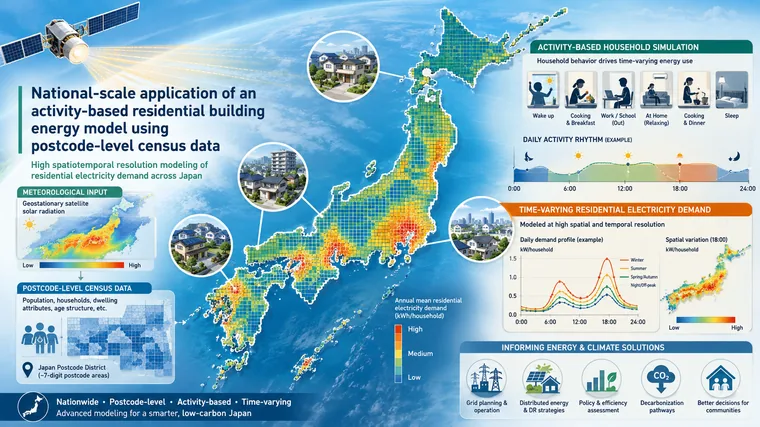
National-scale application of an activity-based residential building energy model using postcode-level census data

An activity-based residential energy model is applied nationally across Japan at postcode-district scale, using AMATERASS-derived meteorological input.

doi:10.26868/25222708.2019.211024 →
2020GeoNEX / gridded data

An Introduction to the Geostationary-NASA Earth Exchange (GeoNEX) Products

Multi-geostationary gridded products demonstrate the broader product ecosystem linked to AMATERASS-related geolocation and gridding workflows.

doi:10.3390/rs12081267 →
2020Power grids / Energy market

Day-ahead Scheduling Method for Electricity Markets Using Neural Networks

Neural-network-based day-ahead scheduling links renewable-energy uncertainty with electricity-market decision support.

doi:10.9746/sicetr.56.57 →
2021Forecast correction / solar irradiance

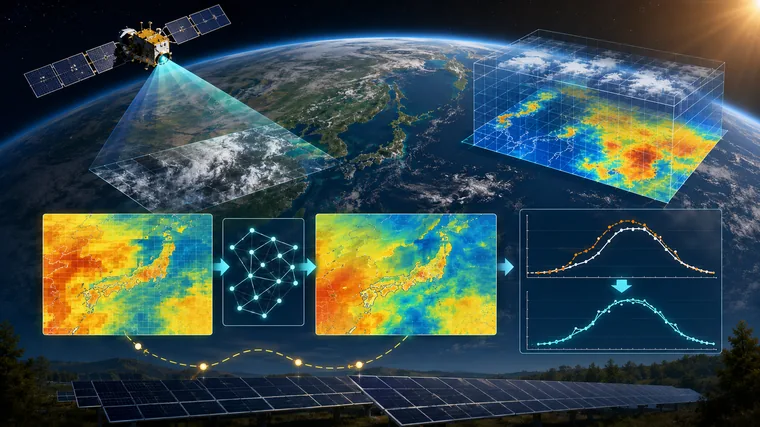
Post-processing correction method for surface solar irradiance forecast data from the numerical weather model using geostationary satellite observation data

Geostationary satellite observations are fused with numerical weather prediction output to improve surface solar irradiance forecast skill.

doi:10.1016/j.solener.2021.05.055 →
2021Vegetation / Monitoring

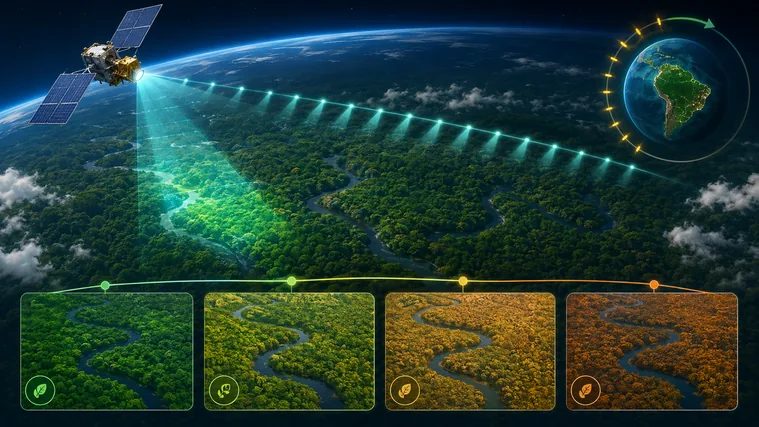
New generation geostationary satellite observations support seasonality in greenness of the Amazon evergreen forests

High-frequency geostationary observations reveal seasonality in Amazon evergreen forest greenness under persistent cloud conditions.

doi:10.1038/s41467-021-20994-y →
2024Renewable energy

Solar irradiance variability around Asia Pacific: Spatial and temporal perspective for active use of solar energy

Regional AMATERASS-based solar-irradiance analysis across Asia-Pacific supports active and strategic use of solar energy.

doi:10.1016/j.solener.2024.112678 →
2025Ecosystem monitoring / GPP

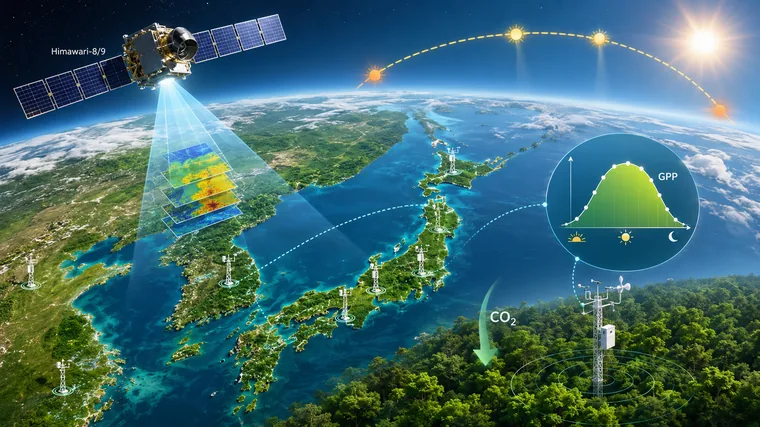
Modeling diurnal gross primary production in East Asia using Himawari-8/9 geostationary satellite data

Himawari-8/9 data are used to model diurnal gross primary production across East Asia, linking flux-tower observations and carbon-cycle assessment.

doi:10.1016/j.rse.2025.114866 →
Projects

AMATERASS Contributions
to Research Projects.

AMATERASS analysis products have been widely used as fundamental solar-radiation and renewable-energy datasets across multiple research fields and projects.

MEXT Special Expense ProjectVirtual Laboratory for Diagnosis of the Earth Climate System
METI / Agency for Natural Resources and EnergyDemonstration Project for the Development of Photovoltaic Power Output Forecasting Technology
JST CRESTCreation and Integration of Theory and Fundamental Technologies for Distributed Cooperative Energy Management Systems
METI / New Energy TechnologiesSurvey of Medium- and High-Temperature Solar Thermal Utilization and Development of Evaluation Methods for Various Systems
MEXT Space Science and Technology PromotionWide-Area Crop Yield Estimation and Short-Term Prediction over the Pacific Rim Using Satellite Inputs for Food Security
MEXT / DIAS Earth Environmental Information PlatformFeasibility Study on Global Deployment of Solar Radiation and Photovoltaic Power Output Products Derived from Geostationary Meteorological Satellites
JST SATREPSDevelopment of Innovative Climate-Resilient Technologies for Improving Water-Use Efficiency and Controlling Salinity in the Aral Sea Region
Media coverage

Media Coverage
and Public Visibility.

AMATERASS and related satellite-based solar-radiation research have been introduced through newspapers, institutional news, and public outreach articles.

Science news / internationalInsights from satellite data pave the way to better solar power generationEurekAlert!, August 27, 2024Additional confirmed coverage
MSNScienceDailyPV MagazineENNTech ExploristScienmagBioengineer.orgSpace DailySolar DailyOne News PageAlphaGalileoEnerzineMirage
Research institute news気象衛星データの社会応用—第4回宇宙開発利用大賞国土交通大臣賞を受賞してNational Institute for Environmental Studies, August 2020
Newspaper海を超える汚染物質Mainichi Shimbun, June 3, 2016
Newspaper日射量オッケー加速Mainichi Shimbun, October 30, 2015
Newspaper coverage衛星データで日射量把握 太陽光発電、予測に活用可Nikkei, October 6, 2014Additional confirmed coverage
共同通信東京新聞西日本新聞北海道新聞福島民報日本海新聞中日新聞京都新聞神戸新聞デーリー東北新聞千葉日報佐賀新聞中国新聞琉球新聞沖縄タイムス福井新聞宮崎日日新聞徳島新聞東奥日報四国新聞高知新聞北國・富山新聞静岡新聞山陰中央日報大分合同新聞長崎新聞
Public outreach雲をつかむ話で太陽光を賢く利用JSTnews, January 2014